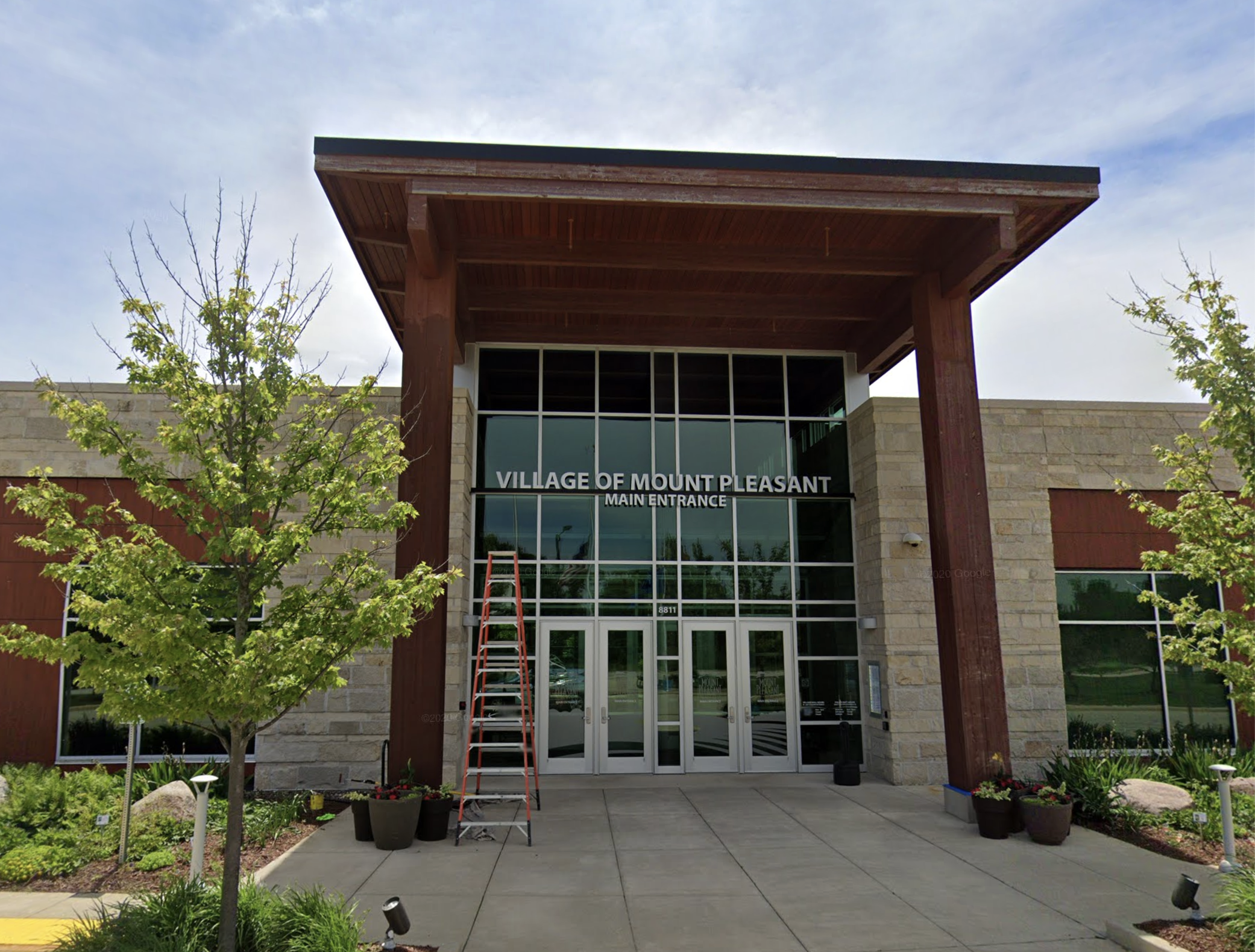

8811 Campus Drive, Mount Pleasant, Wisconsin 53406, United States
Details
Description: The seat of local government for the Village of Mount Pleasant. Mount Pleasant was incorporated as a village in 2003, but the area’s but the area’s history stretches back far longer—the Potawatomi lived on this land for generations before the Treaty of Chicago (1833) forced its cession to the United States. European settlers arrived in the 1830s, and the township was organized in 1842.
Revolutionary Connection: Self-governance is a founding principle—the idea that citizens should have a say in the decisions that affect their lives. Mount Pleasant Village Hall represents that principle in action at the most local level. The village’s recent incorporation (2003) shows that the work of forming new governments didn’t end with the Founders—communities are still deciding how to govern themselves today.

Beacons You Might Find at a City, Village or Town Hall
Historical Documents
Town halls house official government records including town charters, meeting minutes, ordinances, bylaws, resolutions, and proclamations. These documents show how your community has been governed and what issues mattered to residents.
Monuments
Many town halls feature war memorials, dedication plaques, or monuments on the grounds honoring veterans, founders, or significant community events.
Historical Markers
Look for plaques explaining the building’s history, commemorating important events that took place there, or marking the site’s significance to the community.
Historical Art
Town halls often display portraits of past officials, murals depicting local history, seals and emblems, or artwork commissioned to represent community values and heritage.
Historical Photos
Common areas may feature photographs of previous town meetings, historic main street scenes, aerial views showing community growth, or images of significant local events.
Historical Figures
Town halls frequently honor past mayors, selectmen, council members, or other civic leaders through portraits, plaques, or dedicated spaces.
Historic Building or Site
The town hall itself may be historically significant due to its architecture, age, or role as the center of civic life and democratic participation.
Where to Look
- Main entrance and lobby for memorials and artwork
- Council chambers or meeting rooms for portraits and historical displays
- Hallways and corridors for photo galleries
- Exterior grounds for monuments and markers
- Town website: meeting archives, historical information, town history page
- Town clerk’s office for access to historical records (may require appointment)
Tips for Finding Beacons
- Visit during business hours and respectfully observe posted rules
- Ask at the clerk’s office about historical documents or town archives
- Check the town website for digitized historical records
- Look for commemorative plaques on the building exterior
- Some towns have virtual tours or historical information on their websites
- Annual town reports often contain historical information and photos
CONTACT
Related Beacons
No related beacons... yet!